

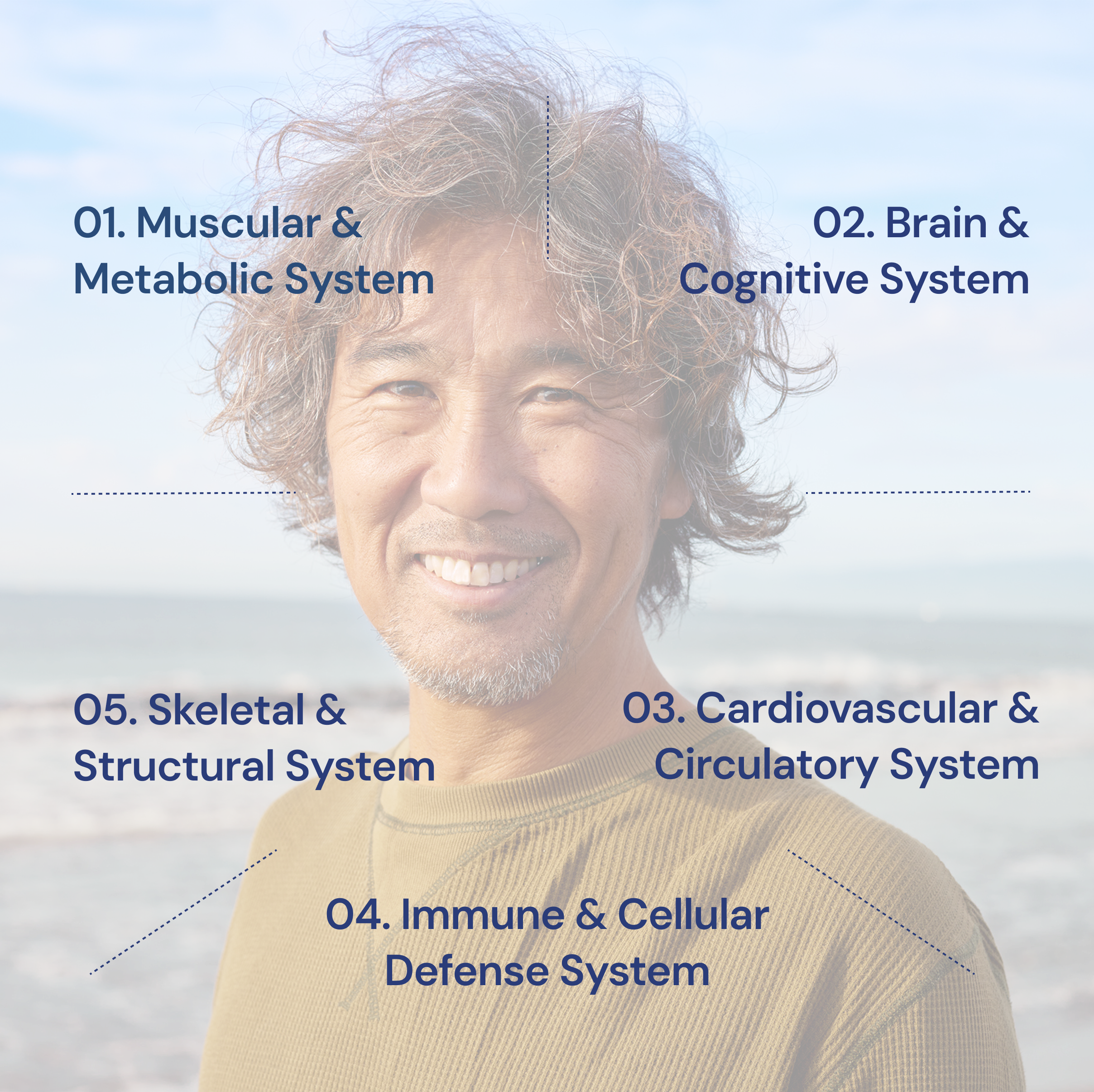
Optimized to Support Five Biological Systems
Field Theory is clinically-formulated to support the five biological systems most critical to long-term health.
Building Blocks for Lifelong Vitality

Building Blocks for Lifelong Vitality
What: A highly digestible and easily absorbed complete protein provides all nine essential amino acids the body needs but cannot make on its own.
Why: Helps maintain muscle mass and strength, supports metabolic rate, and promotes healthy glucose metabolism. As we age, preventing muscle loss (sarcopenia) is key to sustaining mobility, energy, and insulin sensitivity.
How: Field Theory provides 26g of complete plant protein per serving, combining pea and rice protein, with protein from pumpkin, flax, and chia seeds to supply balanced amino acids for muscle repair and metabolic health.
What: Polyphenols found in berries, matcha, and greens, and carotenoids like beta-carotene in pumpkin and leafy vegetables are natural plant compounds that act as protective antioxidants.
Why: They help protect brain cells, blood vessels, and other tissues from oxidative stress and inflammation, key drivers of cognitive decline, vascular stiffness, and cellular aging.
How: Field Theory delivers over 1,000mg of polyphenols per serving, plus carotenoids from pumpkin, sweet potato, kale, and spinach, vastly higher than typical meal replacement and nutrition shakes, or greens powders.
What: Core micronutrients like magnesium, zinc, selenium, B vitamins, and vitamins C, E, K, and beta-carotene power enzyme systems, antioxidant defenses, and structural maintenance.
Why: These nutrients support immune function, energy metabolism, DNA repair, and bone health, reducing risks tied to metabolic slowdown, infections, and skeletal weakening.
How: Field Theory supplies these essential micronutrients entirely from whole foods including seeds, leafy greens, berries, and mushrooms with no isolated or synthetic vitamins added.
What: Non-digestible plant fibers and compounds that feed beneficial gut bacteria and support digestive health.
Why: Supports a healthy gut microbiome, helps regulate blood sugar, aids cholesterol balance, and promotes regularity — critical for maintaining metabolic and cardiovascular health as we age.
How: Field Theory provides 11g of soluble, insoluble, and prebiotic fiber per serving from sources like seeds, greens, root vegetables, and organic prebiotic gums (acacia, guar).
What: Unsaturated fats including Omega-3 ALA and plant sterols from seeds that support lipid balance and cellular health.
Why: Helps maintain flexible cell membranes, balanced cholesterol profiles, and anti-inflammatory signaling, protecting cardiovascular and cellular integrity.
How: Pumpkin, sunflower, flax, and chia naturally deliver 1,650mg of Omega-3 fatty acids embedded in their whole plant matrix.
Whole Food Nutrition Supporting the Biology of Aging
Muscular & Metabolic System
Brain & Cognitive System
Cardiovascular & Circulatory System
Immune & Cellular Defense System
Skeletal & Structural System
Age-related muscle loss (sarcopenia) and reduced metabolic efficiency can lead to weakness, insulin resistance, and increased fat accumulation. Maintaining muscle mass is central to preserving strength and metabolic health.
| Benefits supported | Maintain lean muscle mass, support healthy glucose metabolism, and sustain a robust resting metabolic rate. |
| Nutrients | Complete protein & amino acids, magnesium & B vitamins |
| Our Whole Food Sources | Yellow pea, brown rice, pumpkin seeds, flax, chia, leafy greens |

Aging affects memory, processing speed, and executive function due to cumulative oxidative stress, inflammation, and changes in neurotransmitter activity.
| Benefits supported | Support memory, focus, and protect brain cells from oxidative and inflammatory damage. |
| Nutrients | Polyphenols, carotenoids, iron & B vitamins |
| Our Whole Food Sources | Green tea (matcha), wild blueberries, aronia berry, turmeric, leafy greens, pumpkin seeds |

Vascular stiffness, endothelial dysfunction, and cholesterol imbalances raise cardiovascular risk with age, impacting nutrient delivery throughout the body.
| Benefits supported | Maintain flexible blood vessels, healthy blood flow, and balanced lipid levels. |
| Nutrients | Magnesium, potassium, polyphenols, plant sterols & healthy fats |
| Our Whole Food Sources | Sweet potato, spinach, sunflower seeds, pumpkin seeds, berries |

Immune efficiency declines with age, while chronic low-grade inflammation increases, raising susceptibility to infections and slowing recovery.
| Benefits supported | Support normal immune cell activity and reduce excessive oxidative stress that accelerates cellular aging. |
| Nutrients | Zinc, selenium & vitamins C, E, beta-glucans, polyphenols |
| Our Whole Food Sources | Sunflower seeds, mushrooms, chlorella, berries, turmeric |

Bone mineral density and joint integrity naturally decline, increasing fracture risk and reducing mobility.
| Benefits supported | Preserve bone strength and joint function to maintain mobility and independence. |
| Nutrients | Vitamin D & K, magnesium, calcium co-factors, protein & carotenoids |
| Our Whole Food Sources | Leafy greens (kale, spinach, broccoli), pumpkin, seeds, sweet potato |

FAQs
Where can I find detailed nutrition information?
You can find detailed nutrition information here.
What does complete protein mean and why does it matter?
A complete protein contains all nine essential amino acids that the body can’t make on its own, making it vital for maintaining muscle, metabolism, and tissue repair. In midlife, getting enough high-quality protein becomes increasingly important to prevent age-related muscle loss (sarcopenia), support metabolic health, and maintain physical function.
Quick Fact: After age 40, adults can lose up to 1–2% of muscle mass per year, yet nearly half fall short on daily protein needs, and 80% don’t get enough resistance exercise to protect strength and function. Protein alone isn’t enough, muscle needs both nutrition and use to stay strong.
What are polyphenols and why do they matter?
Polyphenols are a type of phytonutrient naturally occurring in colorful fruits, vegetables, and herbs that help the body manage oxidative stress and inflammation. As we get older, they play a key role in supporting brain health, circulation, and cellular resilience across multiple systems.
Quick Fact: Adults often consume 50–70% less polyphenols than levels associated with reduced risk of cognitive decline, inflammation, and chronic disease.
What are omega-3 fatty acids and why do they matter?
Omega-3 fatty acids support brain, heart, and joint health. In midlife, they contribute to cognitive function, help regulate inflammation, and support long-term cardiovascular wellness.
Quick Fact: More than 90% of U.S. adults fall short on omega-3 intake, despite research linking adequate levels to 30–40% lower risk of age-related cognitive and cardiovascular issues.
Why is fiber so important?
Fiber helps maintain healthy blood sugar and cholesterol levels, supports weight management, and nourishes the gut microbiome linked to immune and inflammatory regulation.
Quick Fact: Adults should get 25–38 grams of fiber per day, but fewer than 1 in 10 Americans meet that target, and intake tends to decline with age.